
How we earn our money
We finance our services on how-to-germany.com through affiliate programs.
When a user orders a financial product through our site and their application is approved, we may receive a commission from some providers. It’s important to note that this does not in any way influence our independent ratings and recommendations.
All the products we present on how-to-germany.com are selected for their quality, range of services, and excellent value for money.
Credit Card Fees Explained
 Written by
Janine El-Saghir
Janine El Saghir is an editor at How-to-Germany.com, where she specializes in the practical aspects of daily life and integration for expatriates. With years of...
Written by
Janine El-Saghir
Janine El Saghir is an editor at How-to-Germany.com, where she specializes in the practical aspects of daily life and integration for expatriates. With years of...
 Reviewed by
Erkan Boga
Erkan Boga is the founder and CEO of qmedia GmbH, the publishing house behind How-to-Germany.com. He established the platform with the clear vision of creating...
Reviewed by
Erkan Boga
Erkan Boga is the founder and CEO of qmedia GmbH, the publishing house behind How-to-Germany.com. He established the platform with the clear vision of creating...
 Edited by
Sadie Voss
Content Lead & Editor
Sadie Voss is the Lead Editor for How-to-Germany.com. As an expat who carved her own way into Berlin from the United States, Sadie is deeply...
Edited by
Sadie Voss
Content Lead & Editor
Sadie Voss is the Lead Editor for How-to-Germany.com. As an expat who carved her own way into Berlin from the United States, Sadie is deeply...
- Free credit cards without annual fees may include travel insurance and foreign-currency benefits, but cash withdrawals, interest, and repayment methods must be checked separately.
- Premium credit cards offer added value through rewards, insurance packages, lounge access, and VIP perks, but only pay off if used actively.
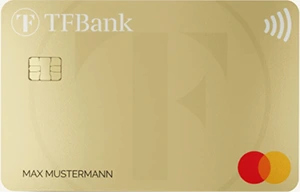
- Some free cards, such as the TF Bank Mastercard Gold, can outperform mid-priced paid cards in the cost-benefit ratio when their repayment conditions are handled correctly.
- Common transaction costs include interest on unpaid balances, immediate interest on cash withdrawals, foreign transaction surcharges, ATM operator fees, and paid repayment services.
- Choosing the right card depends on your spending and repayment habits: frequent travelers may benefit from premium products, while disciplined users can obtain strong value from selected free cards.
Best No-Fee Credit & Debit Cards

Advertising notice: provider links in this overview are affiliate links — we receive a commission from the provider for sign-ups made through them.
Types of Credit Cards and Fee Structures in Germany
The best credit cards in Germany come in four different card types, each with its own cost model and fee structure. Understanding these differences is crucial when selecting a card that suits your needs and budget.
Relevant card types in Germany include charge and revolving credit cards, debit cards, and prepaid cards. A credit card comparison reveals important differences. Debit and prepaid cards, for example, require sufficient funds in the linked account or card balance because they do not provide a normal credit line.
Charge Credit Cards
Charge cards offer a credit limit, with the complete statement balance due monthly or within another predefined payment period. They can provide short-term credit without interest when the statement is settled fully and on time.
Repayment is normally collected automatically from the linked reference account. Traditional providers such as Commerzbank, Deutsche Bank, and Sparkassen commonly offer charge-based products with fixed monthly settlement.
Charge cards usually have an annual or monthly fee, depending on the included benefits and service level.
Charge Cards in Germany
Examples include selected American Express credit cards, the DKB Visa Credit, and charge-style cards offered by traditional banks. Some products may also allow separate installment arrangements, but this does not change their normal monthly settlement model.
Revolving Credit Cards
Revolving cards provide a reusable credit line. Eligible purchases may receive an interest-free payment period of approximately 30 days or longer when the required amount is repaid by the deadline.
Alternatively, users can carry part of the balance into future months and pay interest on the outstanding amount. A minimum monthly repayment is normally required.
Revolving Credit Cards in Germany
Providers offer both paid revolving products, such as the easybank Gold Visa, easybank Platinum Double, and Hanseatic Bank GoldCard, and cards without annual fees.
We currently see very high rejection rates among expat applicants for easybank (formerly Barclays) and Eurowings credit cards. Applying may therefore not be advisable, particularly if you have recently moved to Germany or have a limited German credit history.
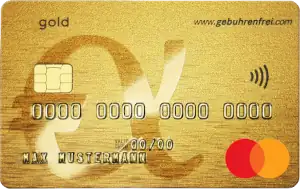
Free revolving credit cards include the Advanzia No-Fee Mastercard Gold, easybank Visa Credit Card, and TF Bank Mastercard Gold. They can be useful travel cards because they waive annual fees and foreign transaction fees under their standard conditions.
However, they should not be described collectively as offering unconditionally free worldwide cash withdrawals. Their withdrawal and repayment rules differ significantly:
- Advanzia No-Fee Mastercard Gold: No normal flat issuer ATM fee, but cash withdrawals accrue high interest from the transaction date. Monthly repayment normally requires a manual bank transfer.
- easybank Visa: No annual fee or foreign transaction fee. Automatic 100% monthly repayment by direct debit costs €2 per month. Users must repay manually or use the available manual Soforteinzug option to avoid this recurring charge.
- TF Bank Mastercard Gold: No normal flat issuer ATM fee, but cash withdrawals accrue interest immediately. Monthly repayment must normally be made manually by bank transfer.
TF Bank and Advanzia do not normally charge a separate fixed withdrawal fee. However, cash withdrawals accrue high borrowing interest from the transaction or booking date.
There is no normal interest-free purchase grace period for these cash withdrawals. Interest can therefore accumulate even when the later monthly statement is paid in full.
Avoid using these cards for cash. If a withdrawal is unavoidable, repay the amount immediately rather than waiting for the statement deadline.
Debit Cards
Modern debit cards use the Visa or Mastercard network. Many direct banks and fintechs issue them automatically with a German current account.
They do not provide a separate credit limit. Card transactions are deducted from the linked account balance. They usually support worldwide card payments, online shopping, Apple Pay, Google Pay, and contactless NFC payments.
Premium debit-card plans may include additional services such as airport-lounge access, expanded ATM allowances, insurance, or rewards.
Some hotels and rental-car companies may prefer or require a genuine credit card for deposits. A debit card can therefore be internationally usable without being accepted for every deposit or guarantee.
Debit Cards in Germany
Leading options include the N26 Debit Mastercard, the Revolut Visa or Mastercard, depending on the plan, and the Trade Republic Visa Debit Card.
These cards support international payments and mobile wallets. Whether cash withdrawals are free depends on the account plan, region, amount, and monthly allowance.
N26 currently offers:
- N26 Go: €9.90 per month, five free euro withdrawals per month, free N26 withdrawals outside the eurozone, and travel insurance
- N26 Metal: €16.90 per month, eight free euro withdrawals per month, free N26 withdrawals outside the eurozone, and broader premium benefits
- N26 Smart: €4.90 per month and three free euro withdrawals per month
- N26 Standard: No monthly account fee and two free euro withdrawals per month
The Trade Republic Visa Debit Card supports issuer-fee-free cash withdrawals from €100 under its current conditions.
Trade Republic offers one Visa Debit Card product in three designs:
- Classic: Physical card with a one-time issuance fee
- Mirror: Premium physical card design with a higher one-time issuance fee
- Virtual: Digital card without a physical card body
Eligible payments made with the card can participate in Trade Republic’s proprietary Saveback program. Saveback rewards are invested in an eligible savings plan, subject to the current monthly limit, spending rules, and minimum savings-plan contribution.
Trade Republic should therefore be described as offering one Visa Debit Card with several designs and a Saveback feature, not multiple “cashback cards.”
The Girocard is Germany’s traditional domestic debit-card system. It works reliably for local card payments and ATM access but has more limited online and international functionality.
Modern Visa and Mastercard Debit cards provide broader international acceptance, online payments, and mobile-wallet support. They are therefore often more practical for expats and frequent travelers.
Prepaid Credit Cards
Prepaid cards must be topped up before use and do not provide a borrowing facility. They may be funded through bank transfers or other supported loading methods.
Although prepaid Visa and Mastercard products can be internationally usable, hotels and rental-car companies may reject them for deposits.
Providers commonly charge annual, monthly, loading, transfer, or ATM fees. Bank transfer is often the least expensive loading method.
Prepaid Cards in Germany
Prepaid cards play a relatively minor role in Germany. Examples include the Commerzbank Prepaid Mastercard and PayCenter Suprema Mastercard.
Differences in How Fees Are Applied by Card Type
Card fees in Germany vary depending on the card type, provider, repayment structure, and included benefits.
Typical Fee Ranges by Card Type
| Card Type | Pricing Tier | Monthly Fee | Annual Fee | Example Cards |
|---|---|---|---|---|
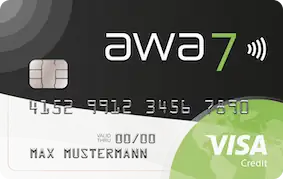
| Charge / Revolving | Free/Budget | €0 – €2 | €0 – €25 | awa7 Visa, easybank Visa, Hanseatic GenialCard, TF Bank Mastercard Gold |
| Mid-price | €3 – €10 | €30 – €100 | easybank Gold Visa, easybank Platinum Double, Hanseatic GoldCard | |
| Premium | €11+ | More than €100 | American Express Gold, American Express Platinum | |
| Debit | Free/Budget | €0 | €0 | N26 Standard, Revolut Standard, Trade Republic |
| Mid-price | €1 – €5 | €10 – €60 | N26 Smart, Revolut Plus, Vivid Prime | |
| Premium | More than €5 | More than €60 | N26 Go, N26 Metal, Revolut Metal | |
| Note: Fee ranges are approximate. The easybank Platinum Double is positioned as a premium travel product but costs €99 per year, or €8.25 per month, and therefore belongs in the table’s €30–€100 mid-price range. | ||||
Key Observations
- Charge and revolving cards may carry higher fees because of their credit lines, repayment flexibility, insurance, or rewards.
- Debit cards can cost more than some credit cards when they are bundled with premium current-account plans.
- Fee categories do not always match product positioning. The easybank Platinum Double is functionally a premium product despite fitting the table’s mid-price fee range.
- Products advertised as free may still charge interest, ATM operator fees, foreign transaction fees, or repayment-service fees.
- Premium cards typically include travel, insurance, lifestyle, or lounge benefits and may have stricter application requirements.
Key Credit Card Fees Explained
Daily card use can produce several different costs in addition to a basic annual or monthly fee.
Annual and Monthly Fees
Some cards charge an annual fee, while many debit-card providers charge a monthly current-account subscription.
Compare the total cost of the card and linked account rather than looking only at the card fee.
Several revolving cards have no annual fee, including the TF Bank Mastercard Gold and Advanzia No-Fee Mastercard Gold. N26 Standard, Revolut Standard, and Trade Republic also provide no-monthly-fee debit-card or account options under their respective conditions.
Foreign Transaction Fees
Paying in non-euro currencies can produce a foreign transaction fee of approximately 1% to 3%.
Cards that commonly waive this issuer fee include easybank Platinum Double, easybank Visa, Hanseatic Bank GenialCard, N26 Go and Metal, and TF Bank Mastercard Gold.
The absence of a foreign transaction fee does not automatically mean that cash withdrawals, dynamic currency conversion, or ATM operator fees are also free.
ATM Withdrawal Fees and Interest
Cash withdrawals can involve several different costs:
- ATM operator fee: Charged directly by the company operating the machine
- Cash-withdrawal interest: Borrowing interest that may start immediately on a revolving card
- Issuer withdrawal fee: A flat or percentage fee charged by the card provider
- Minimum amount: Free withdrawal conditions may apply only above a particular transaction value
- Monthly allowance: A limited number of issuer-fee-free withdrawals
TF Bank and Advanzia illustrate why the phrase “free withdrawal” can be misleading. Both may waive a normal flat issuer transaction fee, but their cash withdrawals accrue interest immediately.
Hanseatic Bank’s withdrawal conditions differ significantly between its cards:
- GenialCard: Cash withdrawals at German ATMs cost a flat €3.95 per transaction. Customers may be able to withdraw cash at participating retailer checkouts, such as selected supermarkets or drugstores, subject to the retailer’s minimum-purchase and withdrawal limits.
- GoldCard: Issuer-fee-free cash withdrawals are available at German ATMs under the current card conditions. Independent ATM operator fees may still apply.
Interest on Revolving Balances
Revolving cards charge borrowing interest, known as Sollzinsen, when balances are carried forward.
Rates frequently exceed 20% per year. TF Bank’s current effective annual interest rate, for example, is 25.09%.
Cash withdrawals can follow stricter rules than purchases. A card may provide an interest-free period for purchases while charging interest on cash from the first day.
Late Payment and Overdraft Consequences
Missing a payment or exceeding the approved limit may result in:
- Collection or reminder costs
- Interest on the outstanding balance
- Negative creditworthiness consequences
- Possible Schufa-related consequences in serious or continuing cases
Additional and Hidden Charges
Other possible costs include:
- Express delivery or special-service charges
- Inactivity fees on selected products
- Paper-statement fees
- Replacement-card fees
- Top-up fees for prepaid products
Free vs. Premium Credit Cards in Germany
German cards vary widely in price and value. A product with no annual fee can still become expensive through interest or transaction charges, while a paid card may provide useful insurance or travel benefits.
What “Free” Really Means – Fully vs. Partially Free Credit Cards
A card described as free normally has no recurring annual or monthly basic fee.
It may still charge for:
- Automatic full repayment
- Cash-withdrawal interest
- Domestic ATM withdrawals
- Foreign-currency transactions
- Installment borrowing
- Paper statements or replacement cards
- Third-party ATM fees
A free card is therefore only genuinely inexpensive when its repayment and transaction conditions match the user’s behavior.
Premium Card Features – And When They’re Worth It
Premium cards may include travel insurance, airport-lounge access, higher rewards, rental-car benefits, hotel status, concierge services, and travel credits.
Products such as the American Express Gold, American Express Platinum, and easybank Platinum Double target customers who actively use these additional services.
The easybank Platinum Double costs €99 per year, equivalent to €8.25 per month. Its insurance and travel package position it as a premium product, but its price places it in the table’s €30–€100 mid-price category rather than the €101+ category.
Examples of Free and Paid Cards with Cost-Benefit Comparison
The best choice depends on how consistently the included benefits are used.
Free Credit Cards
Cards such as the Advanzia No-Fee Mastercard Gold, easybank Visa Credit Card, and TF Bank Mastercard Gold have no annual fee and waive foreign transaction fees under their standard conditions.
Their cash and repayment rules differ:
- Advanzia: Cash withdrawals accrue interest immediately, and repayment normally requires a manual bank transfer.
- easybank Visa: Automatic 100% repayment by direct debit costs €2 per month. Manual repayment or Soforteinzug avoids the recurring card-usage fee.
- TF Bank: Cash withdrawals accrue interest immediately, and repayment normally requires a manual bank transfer.
TF Bank and Advanzia also include travel-insurance packages subject to their activation and eligibility conditions. The standard easybank Visa does not include comparable travel insurance.
Paid Credit Cards
- American Express Gold: €240 per year, with Membership Rewards and travel-related benefits, but foreign transaction and cash-withdrawal fees apply.
- easybank Platinum Double: €99 per year for Visa and Mastercard cards with travel insurance, assistance services, cash-withdrawal benefits, and no foreign transaction fee under its standard conditions.
- Hanseatic Bank GoldCard: €4.90 per month, or exactly €58.80 per year, with travel insurance and additional benefits. It offers issuer-fee-free domestic cash withdrawals under its current conditions.
The Hanseatic Bank GoldCard costs €4.90 per month, equal to €58.80 per year, not €58.90.
The GoldCard offers issuer-fee-free withdrawals at German ATMs under its current conditions. The free GenialCard follows different domestic rules and charges €3.95 per withdrawal at German ATMs.
GenialCard users may be able to withdraw cash at participating retailer checkouts, including selected supermarkets and drugstores, subject to each retailer’s conditions.
Credit Card Savings in Germany
Credit cards can reduce costs when their benefits match your actual spending.
- Business cards: May provide expense controls, accounting integration, rewards, or travel benefits for freelancers and companies.
- Cashback and rewards: Can return value on eligible everyday spending. Trade Republic, for example, offers a Saveback program through its single Visa Debit Card rather than separate cashback-card products.
- Foreign-currency payments: Cards without foreign transaction fees can reduce international spending costs.
- Premium-card benefits: Insurance, lounges, travel credits, and status benefits can justify the fee when used regularly.
- Travel insurance: Can replace selected standalone policies when the card coverage is sufficiently broad and correctly activated.
The key is to match the product to your spending and repayment habits rather than relying only on the advertised fee.
Avoiding Unnecessary Credit Card Fees
Credit cards can be cost-effective, but repayment methods vary considerably between providers.
- Avoid unnecessary cash withdrawals: TF Bank and Advanzia withdrawals accrue interest immediately even though the issuer may not charge a flat transaction fee.
- Avoid foreign transaction fees: Choose a card that waives the issuer surcharge for non-euro purchases.
- Check domestic withdrawal fees: A card may offer fee-free foreign use while still charging at German ATMs. The Hanseatic Bank GenialCard, for example, charges €3.95 for domestic ATM withdrawals.
- Check for hidden costs: Review paper-statement, replacement-card, top-up, inactivity, and automatic-repayment fees.
- Choose the right provider and account combination: Consider the total cost of the card, linked account, and required services.
- Pay the balance in full: Revolving cards charge high interest on unpaid balances. Confirm how full repayment actually works for your card instead of assuming it is automatic.
- Review ATM conditions: Check issuer fees, operator fees, interest, minimum amounts, and monthly limits.
Do not assume that a revolving card automatically clears the complete statement balance.
- Advanzia No-Fee Mastercard Gold: Normal monthly repayment requires a manual SEPA bank transfer.
- easybank Visa: Automatic 100% repayment by direct debit costs €2 per month. Manual repayment or app-based Soforteinzug avoids this charge.
- TF Bank Mastercard Gold: Normal monthly repayment requires a manual bank transfer.
Set a calendar reminder several days before the payment deadline when manual repayment is required. Transfer the complete amount early enough for it to arrive before the due date.
Being fee-conscious does not require giving up useful features. It means choosing a card whose repayment process and transaction rules you can manage safely.
Conclusion
Germany offers products ranging from free revolving cards to premium credit and debit-card plans.
Free cards can provide excellent value, but “no annual fee” and “free cash withdrawal” do not mean that every transaction is cost-free. TF Bank and Advanzia charge immediate interest on cash withdrawals, and neither normally provides automatic full monthly direct debit. The easybank Visa supports automatic full repayment, but the service costs €2 per month.
Pricing categories must also reflect current plan fees. N26 Go costs €9.90 per month and belongs among premium debit-card plans, while N26 Smart at €4.90 per month fits the mid-price tier.
The easybank Platinum Double costs €99 per year, or €8.25 per month. Although its benefits position it as a premium travel card, its actual fee places it in the table’s €30–€100 mid-price category.
Trade Republic offers one Visa Debit Card in Virtual, Classic, and Mirror designs. Its rewards feature should be described as the Saveback program on the card, not as a range of cashback cards.
Hanseatic Bank’s conditions also vary by product. The GoldCard costs €4.90 per month, or €58.80 per year, and provides issuer-fee-free domestic ATM withdrawals. The GenialCard charges €3.95 at German ATMs, although participating retailer checkouts may provide an alternative way to obtain cash.
Choose a card based on its complete cost structure, including repayment mechanics, cash-withdrawal interest, domestic ATM charges, foreign transaction fees, account costs, and included benefits.
Frequently Asked Questions — FAQ
Applying for a credit card in Germany typically involves the following steps:
- Choose your card type (debit, charge, revolving, or prepaid)
- Submit an online application including personal and financial information
- Verify your identity via video or post-ident (depending on the provider)
- If applicable, complete a credit check
- Once approved, the physical or digital card is issued
After receiving the card, you’ll need to complete the credit card activation process. This is typically done through the banking app, a secure web portal, or by confirming receipt via a TAN code. Activation ensures that the card is ready for payments and secure for online and offline use.
Most traditional credit cards — especially charge and revolving cards — require a credit check and are linked to your credit rating and credit history, typically through Germany’s Schufa system. Your payment history and financial behavior influence your approval chances.
However, there are Schufa-free credit card options available, especially relevant for expats, freelancers, or students. These usually include prepaid or debit-based credit cards that do not involve a formal credit check. They are easier to obtain but do not offer a true credit line.
Many premium, as well as some free credit cards include travel health insurance, which covers emergencies during short-term trips abroad. However, this insurance coverage is often limited in duration (e.g., 30–60 days per trip) and scope (e.g., only emergencies). For longer stays or visa requirements, a separate foreign health insurance policy is usually the better choice. It offers more comprehensive protection, may cover pre-existing conditions, and is often accepted by embassies, employers, or universities.
Credit card travel insurance can be a valuable add-on, but it shouldn’t fully replace dedicated foreign health insurance if you require comprehensive protection abroad.