
How we earn our money
We finance our services on how-to-germany.com through affiliate programs.
When a user orders a financial product through our site and their application is approved, we may receive a commission from some providers. It’s important to note that this does not in any way influence our independent ratings and recommendations.
All the products we present on how-to-germany.com are selected for their quality, range of services, and excellent value for money.

Advertising notice: provider links in this overview are affiliate links — we receive a commission from the provider for sign-ups made through them.
Business Credit Cards in Germany
 Written by
Janine El-Saghir
Janine El Saghir is an editor at How-to-Germany.com, where she specializes in the practical aspects of daily life and integration for expatriates. With years of...
Written by
Janine El-Saghir
Janine El Saghir is an editor at How-to-Germany.com, where she specializes in the practical aspects of daily life and integration for expatriates. With years of...
 Reviewed by
Erkan Boga
Erkan Boga is the founder and CEO of qmedia GmbH, the publishing house behind How-to-Germany.com. He established the platform with the clear vision of creating...
Reviewed by
Erkan Boga
Erkan Boga is the founder and CEO of qmedia GmbH, the publishing house behind How-to-Germany.com. He established the platform with the clear vision of creating...
 Edited by
Sadie Voss
Content Lead & Editor
Sadie Voss is the Lead Editor for How-to-Germany.com. As an expat who carved her own way into Berlin from the United States, Sadie is deeply...
Edited by
Sadie Voss
Content Lead & Editor
Sadie Voss is the Lead Editor for How-to-Germany.com. As an expat who carved her own way into Berlin from the United States, Sadie is deeply...
Advertising notice: provider links in this overview are affiliate links — we receive a commission from the provider for sign-ups made through them.
- Best for freelancers: Qonto and Finom are strong options for freelancers and self-employed people who want business banking, card payments, and bookkeeping-friendly expense tools in English.
- Free digital business accounts: Qonto now offers a permanently free Starter plan, while Finom offers the free Solo plan for freelancers.
- German IBANs: Both Qonto and Finom can issue local German IBANs starting with DE, which helps with German invoices, tax payments, client payments, and business credibility.
- German card wording: In Germany, “Kreditkarte” is often used loosely. Many business “credit cards” are actually debit cards or monthly charge cards, not revolving credit cards.
- Schufa reality: Business debit cards are usually easier for new expats because they often do not require a credit line or strong Schufa history. True credit or charge cards may be harder to get, and multiple credit-card applications can hurt your Schufa score.
- Tax deductions: Business card fees might be tax-deductible, but professional advice is recommended.
- Travel benefits: Premium business cards may include travel insurance, lounge access, or rewards, but acceptance and fees vary strongly by provider.
- Personal vs. business expenses: Since the implementation of EU Interchange Fee Regulation 2015/751, commercial cards are intended for business expenses. Occasional personal use by freelancers or sole proprietors is not automatically a criminal offence, but it can violate bank terms and create serious accounting, VAT, and tax-audit problems.
Compare Business Credit Cards in Germany
Advertising notice: provider links in this overview are affiliate links — we receive a commission from the provider for sign-ups made through them.
When comparing business credit cards in Germany, the first question is not only “Which card is cheapest?” but also what type of card you actually need. Many cards marketed as business credit cards are debit cards attached to a business account. Others are charge cards with monthly billing, and only some offer a real credit line.
For freelancers, self-employed people, and expat founders, the most practical choice is often a business account with a linked Visa or Mastercard debit card. These cards are easier to get, usually work well for bookkeeping, and often do not require the same Schufa history as a traditional credit product.
| Card / Provider | Card Type | Best For | German-Market Notes |
|---|---|---|---|
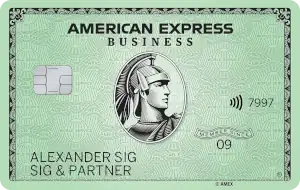
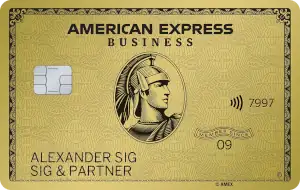
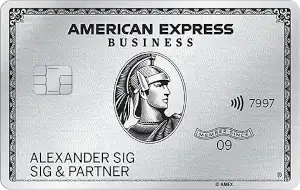
| American Express Business Cards | Charge cards | Higher-spending businesses that want rewards, travel perks, or premium benefits | Business Gold is €0 in the first year, then €175/year. Business Platinum costs €850/year, equal to about €70.83/month. Acceptance is weaker than Visa or Mastercard in smaller German shops, cafés, trades, and public offices. |
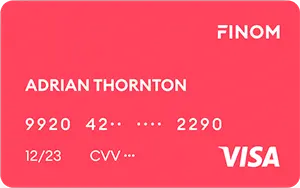
| Finom Solo / Basic Business Debit Visa | Debit card linked to a business account | Freelancers and solopreneurs who want English onboarding, invoicing, and simple spending control | Free Solo plan for freelancers; paid Basic plan for users who need more features. Local DE IBAN available. |
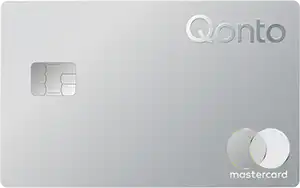
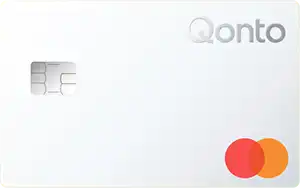
| Qonto One Card | Debit card linked to a business account | Freelancers, self-employed people, and small teams that want structured expense management | Free Starter plan available; paid plans unlock more account and card features. Local DE IBAN available. |
If you recently moved to Germany and have limited Schufa history, start with a business debit card from a provider such as Qonto, Finom, or an expat-friendly option like N26 Business. If you need rewards, travel benefits, or a monthly charge cycle, consider American Express later — but check acceptance carefully, because Amex is still less universal in Germany than Visa or Mastercard.
What are Business Credit Cards?
Advertising notice: provider links in this overview are affiliate links — we receive a commission from the provider for sign-ups made through them.

Business credit cards are financial tools designed for businesses, entrepreneurs, freelancers, and self-employed individuals. Individual free cards in Germany differ from business cards. Business cards come in different types and are tailored to business-related expenses such as travel, purchasing supplies, software subscriptions, advertising, and managing cash flow.
In practice, many German business cards are not “credit cards” in the revolving-credit sense. They may be debit cards linked directly to a business account, charge cards billed monthly, or revolving cards with flexible repayment. This distinction matters for cash flow: a debit card requires available balance immediately, while a charge or credit card can give you more payment flexibility.
Most of the cards are operated within the networks of Visa Card and Mastercard. American Express also issues business cards, but Amex acceptance in Germany can be weaker than Visa or Mastercard, especially in small restaurants, cafés, local shops, trades, and some public offices.
Before applying, compare offerings from more than one provider, as eligibility requirements, accounting tools, card types, and benefits can vary significantly. If you do not need a business-specific card yet, compare debit cards, prepaid cards, and free business-friendly cards such as N26 Business.
Business Cards vs. Corporate Cards
Business credit cards are typically issued to small and medium-sized enterprises (SMEs), freelancers, and self-employed individuals. They often have lower credit limits, require less stringent qualifications, and may offer rewards tailored to business needs.
Corporate cards are usually provided to larger companies and come with higher credit limits, centralized billing, specialized reporting tools, employee-card controls, and customizable features. Unlike many freelancer business cards, a corporate credit card is issued directly to the company rather than to an individual.
Pros and Cons of Business Credit Cards
Before diving into the specifics of business credit cards on the German market, let’s explore the advantages and disadvantages they offer:
- Access to rewards and cashback programs
- Enhanced expense tracking and reporting
- Improved cash flow management
- Opportunity to save money with the right price and rewards structure
- Separation of personal and business expenses
- American Express acceptance can be limited in smaller German businesses
- Business debit cards do not provide a real credit line
- Credit-based cards may require stronger Schufa history
- Holding or applying for multiple credit cards can negatively affect your personal Schufa score
- Limited credit limits compared to corporate cards
- May require a personal guarantee for approval
- Potential for high-interest rates if balances are not paid in full
Using a business credit card responsibly does not automatically “build” a positive credit history in Germany. Small business creditworthiness is usually assessed through real business revenue, tax records, account history, and the owner’s personal Schufa profile. Applying for several cards in a short period can even reduce your Schufa score.
Fees of Business Credit Cards
Business credit cards often come with various fees, including annual card fees, cashback card fees, foreign transaction fees, ATM fees, and additional employee-card costs. It’s crucial to consider these costs when comparing different options. While some cards may have higher annual fees, they often provide added benefits that justify the expense.
For freelancers, the most important question is whether the card helps with bookkeeping. A cheap card can become expensive if it creates manual accounting work, missing receipts, or unclear VAT records. This is why the free Qonto Starter plan and Finom Solo plan are relevant: they let freelancers start with a business account and card structure before upgrading to paid features.
Do not mix private and business spending on your business card. Even if you are a sole proprietor and the purchase is physically possible, mixed transactions make VAT filings, receipt matching, and Finanzamt audits harder. A private restaurant payment or household purchase on a business card can create unnecessary accounting corrections and questions during a tax review.
Features of Business Credit Cards

When selecting a business credit card in Germany, consider the following key features:
- Accounting integrations: Providers such as Qonto and Finom can be useful if they support exports, receipt uploads, or integrations with accounting workflows such as sevDesk, Lexoffice, DATEV, or similar systems.
- Apple Pay and Google Pay integration: Many business cards now support Apple Pay and Google Pay, allowing secure and convenient contactless transactions both in-store and online.
- Card type: Check whether the card is debit, charge, prepaid, or revolving credit. This affects cash flow, approval chances, and repayment risk.
- Contactless payments: Business cards that support contactless NFC payments enable quick and secure purchases by simply tapping the card or using a mobile device.
- Credit limit: Assess the offered credit limit to ensure it meets your business requirements.
- DE IBAN availability: A local German IBAN can make tax payments, client payments, direct debits, and German invoices smoother. Qonto and Finom both offer German IBANs starting with DE.
- Expense management tools: Look for cards that provide expense tracking, receipt uploads, employee-card controls, and reporting tools to simplify bookkeeping and accounting processes.
- Introductory offers: Some cards offer introductory 0% APR periods, allowing interest-free borrowing for a specified initial period.
- Real-time transaction tracking: Some business cards also enable you to monitor balances in real time, making it easier to manage cash flow and avoid overspending.
- Rewards program: Evaluate the rewards structure, including airline miles or points, to match your spending patterns and maximize benefits.
- Travel benefits: If your business involves frequent travel, explore the best travel cards, with benefits such as travel insurance, lounge access, and airline rewards.
- Zero foreign transaction fees: Some business credit cards offer zero foreign transaction fees, which can significantly reduce costs for companies with international clients or regular cross-border purchases.
Business and Personal Expenses Must Stay Separate
Since the implementation of EU Interchange Fee Regulation 2015/751, commercial cards are treated differently from consumer cards because business-card interchange fees are not capped in the same way. To qualify as a commercial card, the card is intended for business expenses.
For freelancers and sole proprietors, this does not mean every accidental private purchase is automatically a criminal offence under German law. However, private use usually violates the card issuer’s terms and can create serious accounting and tax problems. The safest rule is simple: use business cards only for business expenses.
Occasional private use may be physically possible, especially for sole proprietors, but it is risky. It can violate bank terms, weaken your expense documentation, complicate VAT deductions, and create problems if the Finanzamt asks for clean business records.
Choosing the Right Card Type for Your Business
There are multiple business credit card comparisons available in Germany. The different types include debit cards, charge cards, revolving cards, and even prepaid card models.
| Card Type | How It Works | Best For | Main Risk |
|---|---|---|---|
| Business charge card | Monthly spending is collected in full after the billing cycle. | Businesses that want short-term cash-flow flexibility without revolving debt. | May require stronger creditworthiness and reliable repayment. |
| Business debit card | Payments are deducted directly from the business account balance. | Freelancers, new expats, and small businesses that want easy approval and expense control. | No real credit line for cash-flow gaps. |
| Business revolving card | Balances can be carried and repaid in installments. | Businesses that need flexible financing and understand interest costs. | High interest if not repaid in full. |
| Business prepaid card | The card must be pre-funded before use. | Controlled employee budgets or users with limited credit history. | Limited flexibility and possible acceptance issues. |
Your choice should reflect your business size, structure, and spending behavior. Freelancers may benefit most from simple debit or charge cards, while established companies may consider business credit or corporate card solutions.
Provider Notes for Qonto, Finom, and American Express
The best business card depends on whether you care most about easy approval, bookkeeping, rewards, or travel benefits.
American Express Business Cards
American Express business cards can be attractive for rewards, travel benefits, airport lounge access, and charge-card flexibility. However, Amex is not as widely accepted in Germany as Visa or Mastercard. This matters for freelancers who pay for smaller local services, cafés, tradespeople, or government-related fees.
The American Express Business Gold Card costs €0 in the first year and then €175 per year from the second year onwards. This can make it more accessible for new freelancers and early-stage businesses that want rewards without taking on a high annual fee immediately.
The American Express Business Platinum Card has a flat annual fee of €850 per year. That equals about €70.83 per month when averaged over 12 months, but it should not be confused with the private American Express Platinum Card’s monthly pricing. Its value depends heavily on whether you actually use the travel perks, insurance benefits, lounge access, and business services.
American Express Membership Rewards usually earn 1 point per €1 spent. This can be valuable for business owners with high card turnover, especially for travel, advertising, software, or supplier costs. However, the rewards only make sense if the acceptance limitations and annual fees fit your real spending pattern.
Amex is usually better as a secondary business card for rewards and travel, not as your only business card. Most freelancers and sole proprietors should also keep a Visa or Mastercard option for wider acceptance in Germany.
Finom Solo and Basic Business Debit Visa
Finom is especially relevant for freelancers and solopreneurs who want English digital banking, invoicing, and a business debit card. The free freelancer plan is called Solo, while Basic is the paid entry-level plan for users who need more features.
Finom is useful if you want a simple business account and debit card without relying on a traditional German branch bank. Because it is debit-based, it is usually more accessible than a true business credit card. Finom also offers a German IBAN starting with DE, which can make local payments and German client invoicing easier.
Qonto One Card
Qonto’s One Card is a strong business debit-card option for freelancers, self-employed people, and small teams that want expense control and cleaner bookkeeping. Qonto is especially useful if you need receipt uploads, transaction categorization, team-card controls, and accounting exports.
Qonto now also offers a permanently free Starter plan, which makes it a more direct competitor to Finom Solo for freelancers comparing free digital business accounts. The One Card’s exact cost, limits, and included features still depend on the Qonto business plan selected, so users should compare the card together with the account plan, not as a standalone card. Qonto can also issue a German IBAN starting with DE.
N26 Business as a simple debit-card alternative
N26 Business can be a useful sibling option for freelancers who want a simple free business debit card rather than a full business-account suite. It may be less advanced than Qonto or Finom for structured accounting workflows, but it can work well for freelancers who mainly need a low-cost account, Mastercard debit card, and easy everyday payments.
If you are a sole proprietor and cannot get approved for a business charge or credit card, a personal credit card may still be useful as a backup for travel bookings or deposits. Keep business and private spending separate for accounting. For example, compare Hanseatic Bank credit cards if you need a personal Visa card while building your German business history.
How to Get a Business Credit Card?
Each credit card provider has its own application process and documentation requirements. However, to apply for a card as a business owner in Germany, you’ll typically need to meet specific criteria and provide supporting documents.
Requirements
- Business registration: Provide proof of your business registration or self-employment status.
- Existing or newly opened business bank account: Many business cards in Germany are issued by the same provider where your account is held. This simplifies the application process and supports smoother expense tracking.
- Financial documents: Include financial documents such as bank statements, income tax returns, and profit/loss statements to demonstrate your business’s financial stability. Documentation requirements vary depending on whether the card includes a credit line.
- Identification: Submit valid identification documents such as a passport or identification card.
- Personal guarantee: A personal guarantee may be required, especially if your business is new, has limited credit history, or you’re applying for a business card with a charge or revolving credit structure.
If you recently moved to Germany, a traditional business credit card can be difficult to obtain because you may not yet have a strong Schufa history. Business debit cards from digital providers are usually more accessible because they do not require a real credit line. Avoid submitting many card applications at once, because multiple credit checks can hurt your Schufa score.
Process
- Research and compare: Explore the various best credit card options to find one that matches your company’s spending patterns, size, and credit profile. Consider their features, benefits, fees, card type, and approval requirements.
- Choose the target provider: Decide whether you need a business debit card, charge card, or real credit card before starting the application.
- Gather documentation: Prepare the necessary documents, including business registration proof, financial documents, bank account details, and identification.
- Application: Fill out the application form provided by the card issuer, ensuring accuracy and completeness.
- Submission: Submit the application and required documents to the card issuer through its designated channel, such as online or in person.
- Verification and approval: The card issuer will review your application and documentation, conducting necessary verifications. Once approved, you will receive your business card.
Conclusion
Choosing the best credit card for your business in Germany is essential for managing your finances effectively and simplifying your expense processes. For many freelancers and expat founders, the best first step is not a traditional credit card but a business debit card with strong expense tracking, English support, German IBAN access, and accounting-friendly exports.
Qonto and Finom are practical options for everyday business payments and cleaner bookkeeping. Qonto’s free Starter plan and Finom’s free Solo plan now make the free-account comparison more balanced. N26 Business can also be a useful simple debit-card alternative for freelancers who do not need deeper expense-management tools.
American Express can be attractive for rewards and travel benefits, but it should usually be treated as a secondary card because acceptance is weaker than Visa or Mastercard in parts of Germany. The Business Gold Card is especially interesting for new freelancers because it costs €0 in the first year, then €175 per year. Business Platinum is a much larger commitment at €850 per year, or about €70.83 per month when averaged across the year.
Used strategically, a business card can help save money and improve financial management through cashback, rewards, interest-free periods, expense tracking, and discounts on essential services. Used carelessly, it can create bookkeeping problems, tax complications, unnecessary fees, and Schufa issues. Keep business and private spending separate, check whether your card is debit, charge, or credit, and choose the card that matches your real business cash flow.
Frequently Asked Questions
For many freelancers, the best option is a business debit card from a provider such as Qonto or Finom because it is easier to get, works well for expense tracking, and is usually more accessible than a true credit card. If you want travel rewards or premium benefits, American Express can be useful, but it is often better as a secondary card because acceptance in Germany is weaker than Visa or Mastercard.
No. Finom has updated its plan structure. The free freelancer tier is now called Solo, while the former Start plan has been replaced by the paid Basic plan. If you see “Finom Start” in older reviews, check the current Finom pricing page before applying.
You should not use a business card for private expenses. For sole proprietors, an occasional private purchase is not automatically a criminal offence, but it can violate the card issuer’s terms and create serious accounting, VAT, and tax-audit problems. The safest approach is to keep business and private spending completely separate.
It depends on the card type. Business debit cards are often easier to get because they do not provide a credit line. Charge cards and revolving business credit cards may require stronger creditworthiness, income proof, and Schufa history. New expats may find debit-based business cards more accessible.
Business card fees may be tax-deductible if the card is used for business purposes. However, the exact treatment depends on your business structure, accounting method, and how the card is used. Ask a tax advisor if you are unsure, especially if you are VAT-registered.
No. American Express acceptance in Germany is weaker than Visa or Mastercard, especially in smaller shops, cafés, trades, and some local services. Amex can be valuable for rewards and travel benefits, but most businesses should also keep a Visa or Mastercard business card.
Yes, both Qonto and Finom focus on digital business banking and expense management. Depending on the plan, they may support receipt uploads, transaction exports, team spending controls, and accounting workflows. Check the current plan details if you rely on a specific tool such as Lexoffice, sevDesk, or DATEV.
Choose Qonto if you want structured expense management and team-friendly business banking. Choose Finom if you are a freelancer or solopreneur who wants a simple digital account and business debit card. Choose American Express if you value rewards and travel benefits, but keep a Visa or Mastercard backup for wider acceptance in Germany.