
How we earn our money
We finance our services on how-to-germany.com through affiliate programs.
When a user orders a financial product through our site and their application is approved, we may receive a commission from some providers. It’s important to note that this does not in any way influence our independent ratings and recommendations.
All the products we present on how-to-germany.com are selected for their quality, range of services, and excellent value for money.
Credit Card Guide for Expats in Germany
 Written by
Janine El-Saghir
Janine El Saghir is an editor at How-to-Germany.com, where she specializes in the practical aspects of daily life and integration for expatriates. With years of...
Written by
Janine El-Saghir
Janine El Saghir is an editor at How-to-Germany.com, where she specializes in the practical aspects of daily life and integration for expatriates. With years of...
 Reviewed by
Erkan Boga
Erkan Boga is the founder and CEO of qmedia GmbH, the publishing house behind How-to-Germany.com. He established the platform with the clear vision of creating...
Reviewed by
Erkan Boga
Erkan Boga is the founder and CEO of qmedia GmbH, the publishing house behind How-to-Germany.com. He established the platform with the clear vision of creating...
 Edited by
Sadie Voss
Content Lead & Editor
Sadie Voss is the Lead Editor for How-to-Germany.com. As an expat who carved her own way into Berlin from the United States, Sadie is deeply...
Edited by
Sadie Voss
Content Lead & Editor
Sadie Voss is the Lead Editor for How-to-Germany.com. As an expat who carved her own way into Berlin from the United States, Sadie is deeply...
- Germany offers 4 main types of cards: charge, revolving, debit, and prepaid cards.
- Most genuine credit cards require a German address, proof of financial stability, and a Schufa credit check.
- Cards without a conventional Schufa credit assessment are mainly prepaid or debit cards without a credit line.
- Application processes are mostly digital, with identity verification normally completed through VideoIdent, PostIdent, eID, or an app-based process.
- English-language onboarding is available from digital providers such as N26, bunq, Revolut, and Wise.
- Common card costs include monthly fees, borrowing interest, foreign transaction charges, ATM fees, and immediate interest on selected cash withdrawals.
- Girocards, formerly commonly called EC cards, remain widely used in Germany but have more limited international functionality than Visa and Mastercard products.
- Choosing the right card depends on your situation as a newcomer, freelancer, student, employee, or digital nomad.

Advertising notice: provider links in this overview are affiliate links — we receive a commission from the provider for sign-ups made through them.
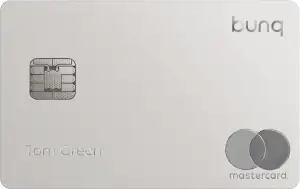
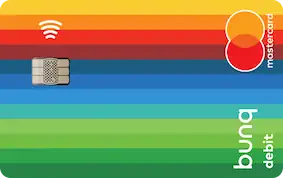
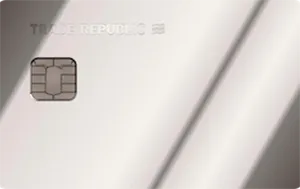
Advertising notice: provider links in this overview are affiliate links — we receive a commission from the provider for sign-ups made through them.
Introduction to Credit Cards in Germany
Navigating the German banking system can be unfamiliar at first, especially for expats accustomed to more credit-oriented financial systems.
German consumers and banks traditionally place strong emphasis on stable income, controlled borrowing, and direct account payments. Credit cards are therefore less central to everyday life than in countries such as the United States, but they remain useful for international payments, travel, online shopping, deposits, and emergencies.
Overview of the German Banking Landscape
Germany’s financial sector includes traditional branch banks, direct banks, and neobanks and fintechs.
Conventional providers such as Commerzbank and Deutsche Bank continue to issue current accounts and genuine credit cards. Expats also increasingly use digital providers such as N26, bunq, Revolut, Wise, and Trade Republic.
However, many digital providers issue modern debit cards rather than true cards with a separate credit line. These cards may provide international acceptance and mobile-wallet support without offering revolving or charge credit.
Traditional and specialist card providers continue to dominate the market for genuine credit products.
Credit Card Acceptance vs. Girocard Usage
One key difference in Germany is the popularity of the Girocard, the domestic debit-card system used widely for local in-store payments.
A pure Girocard is not a credit card and has more limited international and online functionality. Visa, Mastercard, and American Express products are therefore useful for:
- Car-rental and hotel deposits
- International card payments
- Online purchases and subscriptions
- Travel bookings
Many expats use both a local Girocard or German debit card and an internationally accepted Visa or Mastercard product.
When Expats Need a Credit Card
A credit or international debit card may be useful for:
- Booking international flights or accommodation
- Making online purchases from foreign merchants
- Renting a car or providing a hotel deposit
- Subscribing to digital services
- Using a backup payment method while traveling
Do not open or actively use a credit card merely to “build” Schufa. Germany does not use the same credit-building model as the United States. Regular card spending does not automatically improve your score, while unnecessary applications and multiple new credit facilities can negatively affect your financial profile.
Credit Card Types in Germany
German banks and fintechs issue four main card types: charge, debit, prepaid, and revolving cards.
Each type has different repayment rules, application requirements, and financial risks.
Charge Cards
A charge card provides a credit limit, with the complete statement balance normally due at the end of each billing period.
No normal borrowing interest applies when the balance is collected or repaid fully and on time. Providers generally require a stable financial profile, German address, and successful credit assessment.
Examples:
- American Express credit cards
- Commerzbank Mastercard Gold and Premium
- DKB Visa Credit
Revolving Credit Cards
A revolving card provides a reusable credit line and allows the balance to be repaid either in full or in installments.
Interest applies when a balance is carried forward. Rates can be very high, and cash withdrawals may accrue interest immediately even when purchases have an interest-free period.
Examples:
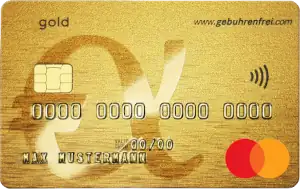
- Advanzia Bank No-Fee Mastercard Gold
- easybank Gold Visa
- easybank Platinum Double
- easybank Visa Credit Card
- Hanseatic Bank GenialCard and GoldCard
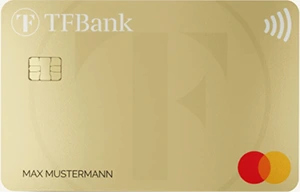
- TF Bank Mastercard Gold
TF Bank and Advanzia are often more accessible than many traditional credit-card providers, but approval is never guaranteed. Applicants must still satisfy identity, residence, and internal creditworthiness requirements.
The consumer card continues to be marketed in Germany as the TF Bank Mastercard Gold.
However, the issuing banking group formally changed its legal company name from TF Bank AB to Avarda Bank AB (publ) in April 2026.
References to the card can continue to use the TF Bank consumer brand, but legal or regulatory disclosures may now identify Avarda Bank AB as the issuing entity.
Debit Cards
Debit cards are linked directly to a bank or payment-account balance. They do not normally offer a separate credit line, and transactions are deducted from the available funds.
Modern Visa and Mastercard debit cards are globally usable and commonly support online purchases, contactless payments, Apple Pay, and Google Pay.
Examples:
- N26 Debit Mastercards
- Revolut debit cards
- Trade Republic Visa Debit Card
- Wise debit card
N26 should not be described as a zero-Schufa-reporting alternative. Account opening in Germany may involve a Schufa-related assessment or reporting, depending on the account and services involved.
Customers with a weak financial profile may be offered a restricted or paid account product rather than the standard account, subject to N26’s current eligibility rules.
Modern debit cards can be used internationally, support online and mobile payments, and often provide many of the practical functions associated with credit cards.
However, they do not provide a traditional credit line. Hotels, rental-car companies, and other merchants may still require a genuine credit card for deposits or guarantees.
Prepaid Cards
Prepaid cards must be funded before use. They do not provide a credit line, overdraft, or installment borrowing.
Because the issuer is not extending normal credit, prepaid products generally do not require a conventional creditworthiness assessment. However, they may charge annual, loading, transfer, or ATM fees.
Examples:
- Commerzbank Prepaid Mastercard
- PayCenter Suprema Mastercard
Prepaid cards may not be accepted for every hotel, rental-car, or deposit transaction.
The German term Kreditkarte is often used broadly for Visa and Mastercard products, including cards without a borrowing function.
Always check whether the product is a charge card, revolving credit card, debit card, or prepaid card.
How to Apply as an Expat
Germany’s credit card application process is normally manageable when the chosen provider matches your residence status, income, documents, and Schufa profile.
What You Need to Apply
Applicants commonly need:
- A bank account with a compatible IBAN
- A German or supported European address
- Proof of income or financial stability for genuine credit products
- A successful Schufa or internal credit assessment when credit is provided
- A valid passport or national identity card
- A visa or residence permit when required for the applicant’s nationality
Requirements vary significantly. Newly arrived non-EU expats and applicants with temporary residence documents may have fewer options than established residents.
Application Steps at a Glance
- Choose a card type: Decide whether you need debit, prepaid, charge, or revolving credit.
- Check the residence and income requirements: Do not rely only on headline advertising.
- Complete the application: Enter your identity, address, employment, income, and banking details.
- Verify your identity: Use VideoIdent, PostIdent, eID, an app process, or another supported method.
- Wait for the internal decision: Approval may be immediate or take several days.
- Activate the card and repayment settings: Confirm whether full repayment is automatic, manual, or subject to a fee.
Best Providers for Expats
Provider suitability depends on whether you need a debit card or genuine credit.
- Advanzia Bank: Revolving card with a historically broader applicant profile than many traditional banks, but manual repayment and immediate cash-withdrawal interest require care.
- easybank: Genuine revolving cards with a Schufa and internal credit assessment. Approval standards can be strict, particularly for newly arrived expats, temporary residents, or applicants with limited German financial history.
- Revolut, Trade Republic, and Wise: Debit-card options without a conventional German revolving credit line.
- TF Bank: Revolving card with no annual fee and a comparatively accessible application process, but approval is still subject to internal assessment.
easybank should not be described as a “low-barrier” provider. Applicants may be asked for extensive identity, income, address, or residence documentation, and newly arrived expats can be rejected.
English-Language Onboarding
Providers such as bunq, N26, Revolut, Wise, and parts of the easybank application or service process may offer English-language digital support.
However, legal notices, credit decisions, customer correspondence, and identity-verification requirements may still be provided partly or entirely in German.
The easiest application is not always the safest or least expensive card.
Compare the provider’s credit requirements, repayment process, borrowing rate, cash-withdrawal rules, foreign transaction fees, document requirements, and customer support before applying.
Understanding the Schufa System
Schufa is Germany’s main private credit-reporting organization. It stores and evaluates data connected to financial contracts, account relationships, applications, and payment problems.
What Is Schufa and How Does It Work?
Banks and other providers may use Schufa information when deciding whether to issue a credit card, overdraft, current account, loan, phone contract, or other financial product.
Schufa is not a US-style reward system in which spending regularly on a credit card automatically produces a better score.
Relevant factors may include:
- The age and stability of financial relationships
- The number of recent account and credit applications
- Existing credit agreements
- Payment defaults or collection cases
- Other reported contractual information
Credit Check Requirements for Different Card Types
- Charge and revolving cards: Normally require a Schufa and internal creditworthiness assessment because the provider extends credit.
- Debit cards: May or may not involve a Schufa query or account entry, depending on the provider and linked account.
- Prepaid cards: Normally do not require a conventional credit assessment because the user spends only preloaded funds.
A debit card should not automatically be described as Schufa-free merely because it lacks a credit line.
Alternatives Without a Conventional German Credit Facility
Expats who want to avoid applying for a revolving or charge credit product can consider prepaid or fintech debit cards.
Clear examples include:
- PayCenter Suprema Mastercard
- Revolut debit card
- Trade Republic Visa Debit Card
- Wise debit card
These products do not provide a normal German revolving credit line. However, providers still perform identity, anti-money-laundering, fraud, and eligibility checks.
N26 is not included in this list because opening and maintaining a German N26 account may involve Schufa-related processing or reporting.
Maintaining a Healthy Schufa Profile
To protect your financial profile:
- Avoid applying for several accounts or credit cards within a short period.
- Avoid unpaid direct debits, collection cases, and missed contractual payments.
- Keep sufficient money in your account for scheduled bills.
- Maintain only the accounts and credit facilities you genuinely need.
- Repay revolving balances fully and avoid unnecessary borrowing.
Do not take out a low-risk credit product solely to “demonstrate reliability.” Routine card use does not create automatic credit-building points.
Free Schufa Data Access Is Not Limited to Once Per Year
Under Article 15 of the General Data Protection Regulation, you can request a free copy of the personal data Schufa stores about you.
This free Datenkopie is not legally restricted to one request per calendar year. A person may request access again at reasonable intervals, particularly when:
- An application has recently been rejected
- Incorrect information is suspected
- New entries or inquiries need to be checked
- A correction request has been submitted
Excessive or manifestly unfounded repeated requests may be treated differently under data-protection law, but Schufa cannot replace the Article 15 right with a strict once-per-year rule.
Request the free Datenkopie under Article 15 GDPR, not the paid landlord-facing credit certificate.
The free data copy is intended for your personal review and can show stored contracts, inquiries, scores, and other reported information. You may request it more than once at reasonable intervals.
Do not give the complete data copy to a landlord because it may contain more personal financial information than the landlord needs.
Credit Card Fees in Germany
German cards can involve annual fees, borrowing interest, ATM costs, foreign transaction fees, and charges for additional services.
Typical Fee Types
- Annual or monthly fees: Regular charges for maintaining the card or linked account
- Cash-withdrawal costs: Issuer fees, ATM operator fees, or immediate borrowing interest
- Foreign transaction fees: Percentage charges for non-euro payments
- Interest: Borrowing costs on revolving balances and selected cash withdrawals
- Late-payment consequences: Reminder costs, interest, collection activity, and possible credit-reporting effects
How to Avoid Hidden Fees
Pay particular attention to:
- Automatic repayment: Some cards require manual repayment or charge for automatic full direct debit.
- Cash advances: Interest may begin on the transaction date.
- Dynamic currency conversion: The ATM or merchant may offer a poor exchange rate.
- Foreign exchange markups: A separate percentage fee may apply.
- Inactivity or service fees: Selected prepaid and specialist cards may charge for limited use or additional services.
Fee Transparency: What to Check Before Applying
- Annual or monthly fee
- Automatic or manual repayment method
- Cash-withdrawal fee and interest treatment
- Foreign transaction fee
- Interest-free period for purchases
- Revolving borrowing rate
- Top-up costs for prepaid products
Best Free Cards in Germany
- Advanzia Bank No-Fee Mastercard Gold
- easybank Visa Credit Card
- Hanseatic Bank GenialCard
- TF Bank Mastercard Gold
- Trade Republic Visa Debit Card
“No annual fee” does not mean every transaction is free. TF Bank and Advanzia cash withdrawals accrue interest immediately, and the easybank Visa charges for automatic full repayment.
Best Cards without Foreign Transaction Fees
- easybank Platinum Double
- easybank Visa Credit Card
- Hanseatic Bank GenialCard
- N26 Go and Metal
- Revolut Premium, Metal, and Ultra
- TF Bank Mastercard Gold
Conclusion
Expats in Germany can choose between genuine charge and revolving credit cards, modern debit cards, and prepaid products.
N26 should not be described as a fully Schufa-free account or card. Revolut, Wise, and Trade Republic are clearer examples of debit products without a conventional German credit facility.
easybank provides genuine revolving cards but should not be promoted as a low-barrier option. Its approval process can be difficult for newly arrived expats and applicants with temporary residence documents or limited German financial history.
TF Bank and Advanzia may have broader approval profiles, but both require careful repayment. Cash withdrawals can accrue interest immediately, and manual repayment may be required.
The TF Bank Mastercard Gold continues to use the TF Bank consumer brand, although the issuing group’s legal name changed to Avarda Bank AB in April 2026.
You can request a free Schufa data copy under Article 15 GDPR more than once at reasonable intervals. Use it to review stored data and correct errors rather than applying for cards in an attempt to “build” credit.
Choose a card based on its real credit requirements, repayment mechanics, interest, withdrawal rules, fees, and document requirements.
Frequently Asked Questions — FAQ
Girocards are Germany’s traditional debit cards, issued by local banks and widely accepted in shops, restaurants, and ATMs within the country. However, they have limited international usability and are only functional abroad when co-badged — previously with Maestro or V-Pay, and increasingly with Mastercard or Visa Debit. These cards do not support all online or international credit card transactions.
Credit cards (Visa, Mastercard, or American Express), on the other hand, are designed for global use, online payments, hotel reservations, car rentals, and other services where Girocards are not accepted. Most traditional banks issue both a Girocard for domestic use and a separate debit or credit card for international payments.
Neobanks and fintechs like N26, bunq, or Revolut don’t issue Girocards at all. Instead, they provide modern debit cards (Visa or Mastercard) that combine domestic and international usability, making them ideal for expats and travelers.
In Germany, identity verification is required when opening a bank account or applying for a credit card. Two official methods are commonly used:
- VideoIdent: This online verification process connects you to a certified agent via video call. You’ll be asked to show your passport or ID and answer a few questions. It’s fast, secure, and can be done from anywhere on your smartphone or computer within minutes.
- PostIdent: This offline alternative requires visiting a Deutsche Post branch. You present your identity document and a form provided by your bank. It takes more time, but it is equally valid and often offered as a fallback if video identification doesn’t work.
Many credit card providers prefer VideoIdent due to its speed and convenience, but both methods fulfill Germany’s legal requirements.
Yes, it’s possible to obtain a credit card in Germany even without a Schufa history. Prepaid credit cards and many fintech debit cards can be opened without a credit check, making them a practical solution for expats who are new to the country. These cards are suitable for online purchases, everyday payments, and even international use.
In addition, some providers offer revolving credit cards with relatively low approval thresholds, even though a Schufa credit check is technically required. Examples are the TF Bank Mastercard Gold and the Advanzia Bank No-Fee Mastercard Gold. Both cards come with no annual fee, allow free cash withdrawals worldwide, charge no foreign currency fees, and include basic travel insurance. For newcomers seeking a genuine credit card with flexible terms, these revolving credit cards can be excellent entry-level options in the German market.
Not every card that claims to be free is entirely cost-free. In Germany, a credit card is considered “completely free” if it charges no monthly or annual fees, offers unlimited free cash withdrawals, and has no foreign currency fees. However, even these cards may apply charges under certain conditions, such as interest for installments and late payments, or when using cash advances.
Always check the detailed fee structure and your card’s terms and conditions to ensure they align with your intended use. Cards like the TF Bank Mastercard Gold or the Advanzia Mastercard Gold Credit Card are popular examples of zero-fee cards, especially for travel and online use. Both cards come with no annual fee, credit line, worldwide free ATM withdrawals, and no foreign transaction fees.
The best credit card depends on your residency status, income, and credit history. Students often benefit from free debit cards offered by providers like N26 or Revolut, which are easy to set up and ideal for everyday purchases and online credit card payments. Freelancers or self-employed expats with sufficient income may qualify for real credit cards such as the Hanseatic GenialCard or TF Bank Mastercard Gold, both of which offer flexible application criteria and low fees. Digital nomads or newcomers with no German credit history can consider prepaid cards or fintech options, such as N26, Revolut, bunq, and Trade Republic, which do not require a Schufa credit check and are available entirely online.