
How we earn our money
We finance our services on how-to-germany.com through affiliate programs.
When a user orders a financial product through our site and their application is approved, we may receive a commission from some providers. It’s important to note that this does not in any way influence our independent ratings and recommendations.
All the products we present on how-to-germany.com are selected for their quality, range of services, and excellent value for money.
The German Opportunity Card (Chancenkarte)
 Written by
Janine El-Saghir
Janine El Saghir is an editor at How-to-Germany.com, where she specializes in the practical aspects of daily life and integration for expatriates. With years of...
Written by
Janine El-Saghir
Janine El Saghir is an editor at How-to-Germany.com, where she specializes in the practical aspects of daily life and integration for expatriates. With years of...
 Reviewed by
Erkan Boga
Erkan Boga is the founder and CEO of qmedia GmbH, the publishing house behind How-to-Germany.com. He established the platform with the clear vision of creating...
Reviewed by
Erkan Boga
Erkan Boga is the founder and CEO of qmedia GmbH, the publishing house behind How-to-Germany.com. He established the platform with the clear vision of creating...
 Edited by
Sadie Voss
Content Lead & Editor
Sadie Voss is the Lead Editor for How-to-Germany.com. As an expat who carved her own way into Berlin from the United States, Sadie is deeply...
Edited by
Sadie Voss
Content Lead & Editor
Sadie Voss is the Lead Editor for How-to-Germany.com. As an expat who carved her own way into Berlin from the United States, Sadie is deeply...
- Non-EU citizens can use the Opportunity Card to live and job-hunt in Germany for up to a year.
- No job offer is required at the time of application.
- Holders may work part-time for up to 20 hours per week and take part in short-term trial employment for up to 2 weeks per employer.
- There are 2 routes: a direct route for recognized skilled workers and a points-based route for other qualified applicants.
- If your qualification is fully recognized in Germany, you may qualify directly as a skilled worker and do not need to score points.
- If your qualification is not fully recognized in Germany, you usually need to meet the basic requirements and score at least 6 points.
What Is the Opportunity Card (Chancenkarte)?
The Opportunity Card (Chancenkarte) is a residence pathway introduced as part of Germany’s strategy to address skilled labor shortages. The Chancenkarte allows qualified non-EU citizens to live and job-hunt in Germany for up to a year according to German visa requirements, without a job offer or German work visa approval.
Unlike the traditional job-seeker German visa or freelance German visa, the Opportunity Card offers greater flexibility during the job search period. However, not every applicant uses the same eligibility route. Some applicants qualify directly as recognized skilled workers, while others must use the points system.
Benefits: Part-Time Work and Trial Employment
While looking for full-time employment, Opportunity Card holders can work part-time for a maximum of 20 hours a week. In addition, short periods of trial employment are permitted for up to 2 weeks per employer, allowing you to gain practical experience and connect with potential employers. This means the 2-week limit applies to each individual employer, not as one total limit for the entire year. You may complete trial work with different employers during the validity of the Opportunity Card, as long as each individual trial period does not exceed 2 weeks per employer. Trial employment must support your job search and should aim to lead to qualified employment, vocational training, or a qualification measure.
Duration and Extension
The Opportunity Card is typically granted for up to 1 year. It cannot be extended only because there is a general or realistic prospect of employment. A follow-up Opportunity Card may be granted for up to 2 additional years if you have already found a specific job offer or employment contract for qualified work in Germany, the role meets the legal requirements, and the Federal Employment Agency approves the extension where required.
Basic Eligibility Requirements
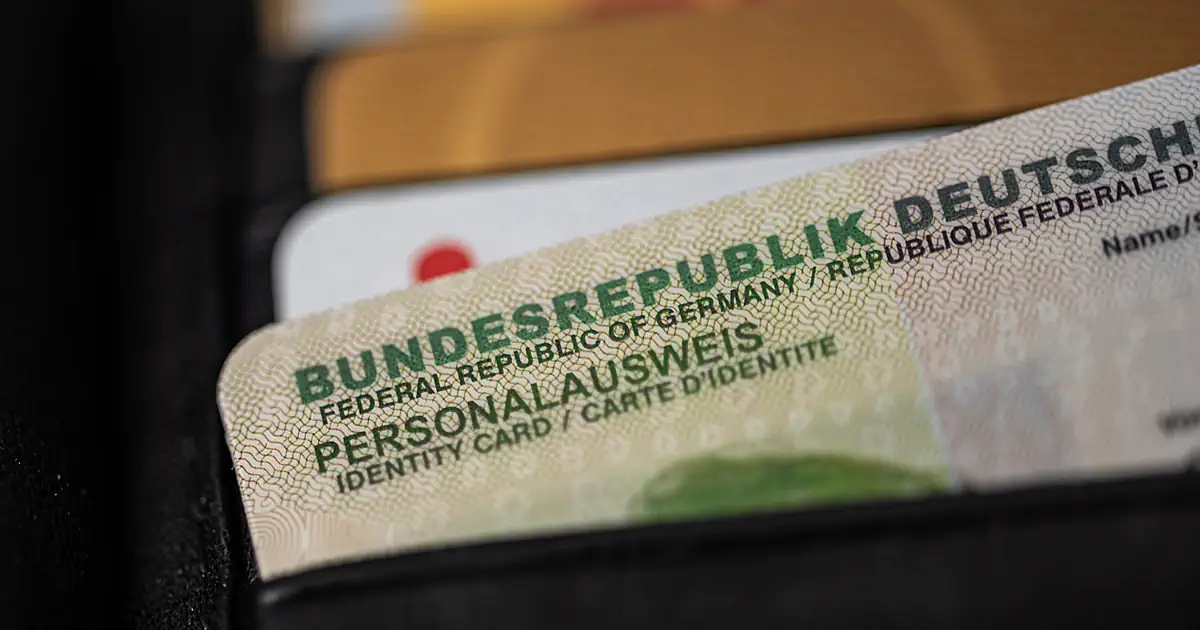
To qualify for the Opportunity Card, you first need to identify which route applies to you. The requirements are different for recognized skilled workers and applicants who use the points system.
| Route | Who it applies to | Points required? | Language certificate required? |
|---|---|---|---|
| Direct skilled-worker route | You have a German qualification or a foreign academic or vocational qualification that is fully recognized in Germany. | No | No, although German skills are strongly recommended for finding a job. |
| Points-based route | You do not have a fully recognized German-equivalent qualification, but you have a valid foreign qualification and meet the baseline criteria. | Yes, at least 6 points | Yes, German A1 or English B2 minimum. |
Recognized Degree or 2 Years Vocational Training
Applicants must have either a recognized academic degree or at least 2 years of vocational training. Depending on the profession, formal recognition of qualifications may be required.
If your academic or vocational qualification is fully recognized in Germany, you may qualify through the direct skilled-worker route. In this case, you do not need to use the points system.
If your qualification is not fully recognized in Germany, you may still qualify through the points-based route if your qualification is recognized in the country where it was obtained and you meet the other requirements.
For academic degrees, applicants should check the Anabin database. In most cases, the university should be listed as H+, and the degree should be comparable to a German qualification. If the result is unclear, missing, or not enough for the visa application, you may need a ZAB Statement of Comparability. For vocational qualifications, you may need formal recognition or a positive digital statement on your professional qualification.
Language Skills
Language skills are required for the points-based route. Applicants using this route must demonstrate basic language skills, either at least A1 level in German or B2 level in English. Higher German or English levels can increase your score under the points system.
German certificates should usually come from an ALTE-certified institution, such as Goethe-Institut, telc, TestDaF, or ÖSD. English certificates are commonly accepted through recognized tests such as IELTS or TOEFL. Many German missions require language certificates to be no older than 12 months, so always check the checklist of the responsible embassy or consulate before applying.
Applicants who qualify directly as recognized skilled workers do not need to prove language skills for the Opportunity Card. However, German language skills are still recommended because they can improve your chances of finding qualified employment in Germany.
Proof of Financial Support
Applicants must show that they can support themselves during their stay. This is often done through a blocked account (Sperrkonto), although other forms of financial proof may be accepted depending on the situation. Common blocked account providers include Coracle, Expatrio, and Fintiba, but the final decision depends on the responsible German mission.
The Points System Explained
Eligibility for the Opportunity Card depends on a points system only if you apply through the points-based route. If you qualify directly as a recognized skilled worker, you do not need to score points.
For the points-based route, you must meet the basic qualification and language requirements and score at least 6 points based on the following criteria:
Opportunity Card Germany: Points System
To qualify through the points-based route, you must score at least 6 points based on the following criteria:
| Criteria | Points | Details |
|---|---|---|
| Age | 1–2 points | Under 35 years old = 2 points; 35–40 years old = 1 point. Once you turn 41, you receive 0 points for age. |
| Language Skills | Up to 4 points | German A2 = 1 point; German B1 = 2 points; German B2 or higher = 3 points. English C1 or native English may add 1 point. |
| Partial Recognition of Qualification | 4 points | You receive 4 points if your foreign qualification has been assessed as partially equivalent, or if you need compensatory measures for a regulated profession. |
| Partner Qualification | 1 point | If your spouse or registered partner also meets the Opportunity Card requirements and applies with you. |
| Previous Stay in Germany | 1 point | Legal residence in Germany for at least 6 continuous months in the last 5 years. Tourist stays do not count. |
| Professional Experience | 2–3 points | 2+ years of relevant post-qualification experience in the last 5 years = 2 points; 5+ years of relevant post-qualification experience in the last 7 years = 3 points. |
| Shortage Occupation | 1 point | You receive 1 point if your qualification is in a shortage occupation, such as certain roles in IT, engineering, healthcare, skilled trades, science, education, or transport. |
Points for Professional Experience
Points are awarded based on the duration and relevance of your professional experience. For the points-based route, this experience must be related to your formal qualification and must have been gained after you obtained the relevant degree or vocational qualification. Applicants with at least 2 years of relevant post-qualification experience in the last 5 years may receive 2 points, while applicants with 5 or more years of relevant post-qualification experience in the last 7 years may receive up to 3 points. Experience gained before the relevant qualification, or work experience unrelated to that qualification, should not be counted for these points.
Points for Language Proficiency
Language skills can contribute significantly to your total score, with up to 4 points available. German language skills are typically weighted more strongly. German A2 gives 1 point, German B1 gives 2 points, and German B2 or higher gives 3 points. English C1 or native English may add 1 additional point.
Points for Age
The points system favors younger applicants. Candidates receive 2 points if they are under 35 at the time of application. Applicants aged 35 to 40 receive 1 point. Once an applicant turns 41, they no longer receive points in the age category.
Points for Previous Stays and Partner Qualifications
Additional points may be awarded if you have previously lived in Germany for a longer period, for example, for study, training, or work. Points may also be granted if your spouse or registered partner meets the requirements for the Opportunity Card and applies together with you.
Maya is 32 years old and has a foreign bachelor’s degree in computer science that is recognized in her home country but not yet fully recognized in Germany. She applies through the points-based route.
- Age: 32 years old = 2 points
- Professional experience: 3 years of post-qualification IT experience in the last 5 years = 2 points
- Language: German A2 certificate = 1 point
- Shortage occupation: IT qualification = 1 point
Total: 6 points. Maya reaches the minimum score for the points-based route. She still needs to prove financial support, submit the required documents, and meet the embassy’s language-certificate and qualification-proof requirements.
- Step 1: Check whether your academic degree is listed in Anabin and whether your institution has H+ status.
- Step 2: Check whether your degree is clearly comparable to a German qualification. If not, request a ZAB Statement of Comparability.
- Step 3: Check whether your vocational qualification or regulated profession needs recognition in Germany.
- Step 4: If your qualification is fully recognized, check the direct skilled-worker route first.
- Step 5: If your qualification is not fully recognized, calculate whether you can reach at least 6 points.
You can also use the official Opportunity Card self-check from Make it in Germany.
How to Apply
Applying for the Opportunity Card involves preparing the required documents and submitting your application through the appropriate German authorities abroad. While parts of the process may be supported online, the application itself is typically completed in person.
| Stage | What to do | Why it matters |
|---|---|---|
| 1. Identify your route | Check whether you qualify directly as a recognized skilled worker or need the points-based route. | This determines whether you need points and language proof. |
| 2. Check your qualification | Use Anabin, ZAB, or the relevant recognition authority to confirm your qualification status. | Your qualification is the foundation of the application. |
| 3. Prepare language proof | For the points route, collect a valid German or English language certificate accepted by the German mission. | Old or non-recognized certificates may be rejected. |
| 4. Secure financial proof | Prepare a blocked account, declaration of commitment, or other accepted proof of funds. | You must prove that you can support yourself during the job search. |
| 5. Submit your application | Apply through the German mission, external visa center, or digital portal where available. | The responsible authority decides based on your documents. |
Application Through German Missions Abroad
Applications for the Opportunity Card are submitted through German embassies or consulates in your country of residence. Depending on the location, external service providers may be involved in handling appointments or collecting documents.
Appointments are typically booked online via the website of the responsible embassy or consulate. You will usually need to attend an in-person appointment to submit your application and provide biometric data.
Using the Consular Services Portal
You can access general information and, in some cases, prepare parts of your application through the consular services portal of the Federal Foreign Office (digital.diplo.de). The portal allows you to check whether online services are available in your country and may support appointment booking or document preparation.
Online services do not replace the application process at a German mission abroad. You must attend an in-person appointment to submit your documents and provide biometric data.
Transitioning to a Work Visa
Once you have an employment contract with a German employer, you can transition from the Opportunity Card to a suitable residence permit for employment. This typically involves applying for a work-based residence permit, such as the EU Blue Card or a general skilled worker visa.
To do so, you must meet the requirements of the respective residence title, including applicable salary thresholds and relevant qualifications. Depending on the role, recognition of your qualifications may also be required.
The Opportunity Card is therefore not a long-term residence status but a pathway that allows you to enter Germany and secure employment before switching to the appropriate permit. If you find qualified employment but do not qualify for another residence title, a follow-up Opportunity Card may be possible for up to 2 years. This requires a concrete job offer or employment contract for qualified employment and approval from the Federal Employment Agency where required.
General Requirements and Documents
In addition to the specific eligibility criteria for the Opportunity Card, you must submit a range of supporting documents as part of your visa application. German diplomatic missions may request further documentation depending on your individual situation. This can include information about your financial circumstances in your home country, as well as personal details such as marital status and family background, which are typically collected during the application process. Those interested in more pathways can explore Germany family reunion visas, EU Blue card visas, and Germany student visas.
Can You Qualify for the German Opportunity Card?
Use this quick checklist to see whether you qualify through the direct skilled-worker route or the points-based route:
| Requirement | Details | Must Meet? |
|---|---|---|
| Direct Route: Fully Recognized Qualification | German qualification or foreign degree/vocational qualification fully recognized in Germany. | Yes, for the direct skilled-worker route. |
| Mandatory: Financial Means | Blocked account, declaration of commitment, or other accepted proof of support. | Yes, for both routes. |
| Points Route: Language Skills | German A1 or English B2 minimum, proven with a valid accepted certificate. | Yes, only for the points-based route. |
| Points Route: Minimum Points | At least 6 points required. | Yes, only for the points-based route. |
| Points Route: Qualification | Foreign academic or vocational qualification recognized in the country where it was obtained; vocational training must usually have lasted at least 2 years. | Yes, only for the points-based route. |
| Points System: Age | Under 35 = 2 points; 35–40 = 1 point; 41+ = 0 points. | No, but can add points. |
| Points System: Language Level (Higher) | Higher German/English levels add points. | No, but can add points. |
| Points System: Partial Recognition | Partial equivalence of a foreign qualification can add 4 points. | No, but can add points. |
| Points System: Previous Stay / Partner | Germany experience or qualified partner. | No, but can add points. |
| Points System: Professional Experience | 2–5+ years of relevant post-qualification experience increases your score. | No, but can add points. |
| Points System: Shortage Occupation | A qualification in a shortage occupation can add 1 point. | No, but can add points. |
Proof of Sufficient Financial Means
You must demonstrate that you can support yourself in Germany for 12 months. In most cases, this is done through a blocked account (Sperrkonto), which must cover the full period with a fixed monthly amount. Currently (status 2026), this is around €1,091 per month, or €13,092 for a 1-year Opportunity Card.
Alternative forms of financial proof may also be accepted. These can include a formal commitment declaration (Verpflichtungserklärung) by a person residing in Germany who agrees to cover your expenses.
Health Insurance
Valid visa German insurance requirements are required for the visa application. It is typically provided as an incoming travel insurance policy that meets Schengen requirements and covers the entire duration of your stay.
In practice, some applicants choose expat health insurance policies that offer broader coverage than standard travel insurance while still being accepted for visa purposes. Once you take up employment in Germany, this insurance is usually replaced by regular German health insurance.
Conclusion
The Opportunity Card is a German long-stay visa type providing a structured pathway for qualified non-EU nationals to enter Germany and search for employment without a prior job offer. The most important step is identifying the correct route: recognized skilled workers may qualify directly, while other qualified applicants must use the points-based system.
In practice, a successful application depends on understanding how the different criteria interact and preparing the necessary documents accordingly. Applicants who meet the requirements and plan their job search realistically can use the Opportunity Card as an effective entry point into the German labor market. If you later want to stay longer, you usually need a suitable residence permit for qualified employment or, in limited cases, a follow-up Opportunity Card based on a concrete qualified job offer.
Frequently Asked Questions
To apply for the Opportunity Card, you must meet minimum eligibility criteria, including a vocational qualification or a foreign university degree. In addition, you need to demonstrate basic language skills and meet the financial requirements for your stay.
The points system evaluates factors such as your professional experience, language skills, age, and previous connections to Germany. Points may also be awarded for recognized foreign professional qualifications and other criteria relevant to your profile.
Applicants must demonstrate either German language skills at level A1 or English language skills at level B2. Higher levels of language proficiency can increase your score under the points system.
Yes, the Opportunity Card allows limited access to gainful employment. You can work part-time for up to 20 hours per week and take part in short periods of trial employment while searching for qualified employment.
Once you secure a position, you can transition to a residence permit for qualified employment. To do so, you must meet the requirements of the respective residence title, including having a suitable, qualified position.
The Federal Employment Agency is typically involved when you transition from the Opportunity Card to a residence permit for employment. It assesses whether the position meets the relevant requirements, particularly regarding working conditions and the applicant’s qualifications. This may include verifying that your qualifications are recognized and that you qualify as a recognized skilled worker under German regulations.
The Opportunity Card is primarily designed for individuals seeking employment in Germany. Family members are generally not included at this stage. Once you transition to a residence permit for employment, options for family reunification may become available.
Footnotes and Sources
- https://www.bmi.bund.de/SharedDocs/kurzmeldungen/EN/2024/05/chancenkarte.html
- https://www.iwkoeln.de/en/studies/jeannette-michaelle-nintcheu-skilled-immigration-via-the-opportunity-card.html
- https://niederlande.diplo.de/resource/blob/2725336/399cac4d999686e7f50f88ec0b015a89/014-eng-merkblatt-chancenkarte-20a-und-20b-barrierefrei-data.pdf