
How we earn our money
We finance our services on how-to-germany.com through affiliate programs.
When a user orders a financial product through our site and their application is approved, we may receive a commission from some providers. It’s important to note that this does not in any way influence our independent ratings and recommendations.
All the products we present on how-to-germany.com are selected for their quality, range of services, and excellent value for money.
Germany Long-Stay Visas (National D-Visas)
 Written by
Janine El-Saghir
Janine El Saghir is an editor at How-to-Germany.com, where she specializes in the practical aspects of daily life and integration for expatriates. With years of...
Written by
Janine El-Saghir
Janine El Saghir is an editor at How-to-Germany.com, where she specializes in the practical aspects of daily life and integration for expatriates. With years of...
 Reviewed by
Erkan Boga
Erkan Boga is the founder and CEO of qmedia GmbH, the publishing house behind How-to-Germany.com. He established the platform with the clear vision of creating...
Reviewed by
Erkan Boga
Erkan Boga is the founder and CEO of qmedia GmbH, the publishing house behind How-to-Germany.com. He established the platform with the clear vision of creating...
 Edited by
Sadie Voss
Content Lead & Editor
Sadie Voss is the Lead Editor for How-to-Germany.com. As an expat who carved her own way into Berlin from the United States, Sadie is deeply...
Edited by
Sadie Voss
Content Lead & Editor
Sadie Voss is the Lead Editor for How-to-Germany.com. As an expat who carved her own way into Berlin from the United States, Sadie is deeply...
- A national visa (D visa) is required for stays in Germany longer than 90 days and serves as the basis for obtaining a residence permit.
- Long-stay visas cover different pathways, including employment, study, vocational training, and family reunification.
- The visa is issued before entry and must be followed by registration (Anmeldung) and a residence permit application in Germany before the visa expires.
- Requirements vary depending on the purpose of your stay but generally include proof of financial means, health insurance, and a clear reason for residence.
- Choosing the correct visa category and preparing complete documentation are essential for a successful application.
The National Long-Stay (D-Class) Visa Defined
A national long-stay visa (D visa) is required if you plan to stay in Germany for more than 90 days. Unlike short-stay Schengen visas, it is issued under national regulations and is the basis for obtaining a residence permit.
D visas are tied to a specific purpose of stay, such as employment, study, or family reunification, and allow you to enter Germany to complete the necessary steps for long-term residence.
Transitioning from a Visa to a Residence Permit
After entering Germany with a D visa, you must complete several administrative steps to obtain your residence permit.
This typically includes registering your address (Anmeldung) and attending an appointment at the local immigration office (Ausländerbehörde), where your residence permit is issued.
National visas are issued for a limited period, typically 3 to 6 months. During this time, you must complete the required steps to obtain a residence permit before the visa expires.
When a German Long-Stay Visa Makes Sense
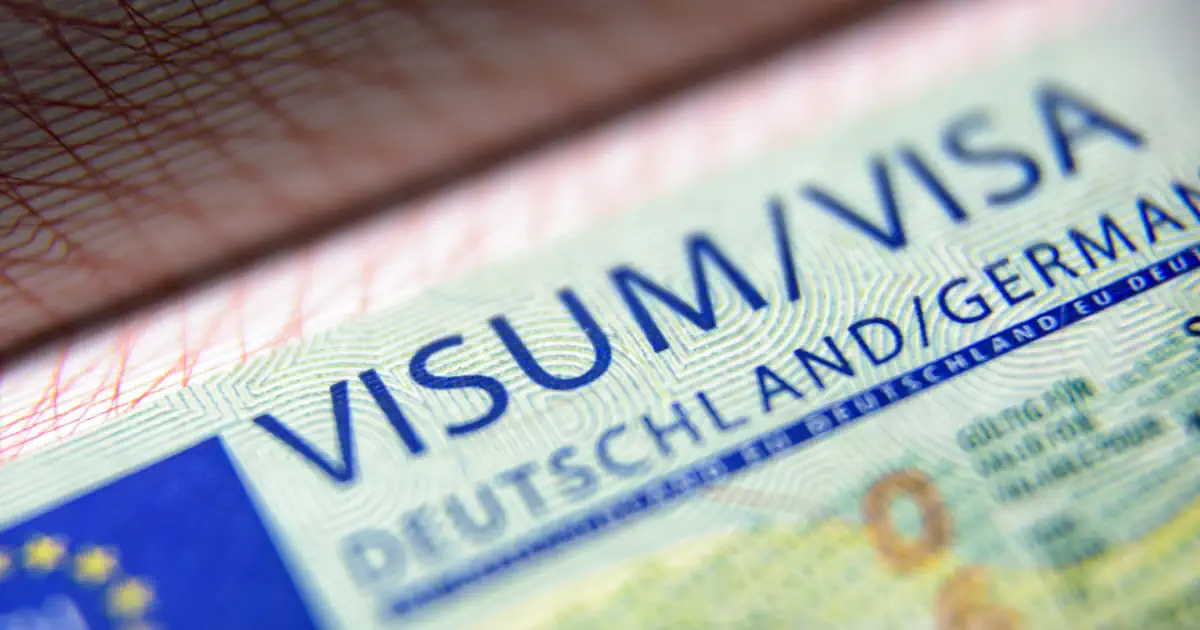
Whether you need a German long-stay visa before entering Germany depends on your nationality.
Nationals of many countries must apply for a D visa in advance through a German mission abroad. In contrast, citizens of Australia, Canada, Israel, Japan, New Zealand, South Korea, the United Kingdom, and the United States may enter Germany without an entry visa and apply for the required residence permit after arrival under Section 41(1) AufenthV. There are multiple options for residence permits:
| Visa Type | Avg. Duration | Work Permission | Key Requirement | Notes |
|---|---|---|---|---|
| EU Blue Card | Up to 4 years | Full-time | Job offer & salary threshold (~€50,700). | Fast track to permanent residence. |
| Family Reunion Visa | Initial 1–3 years | Depends on case | Family relationship & sponsor status. | Umbrella category for spouses and children joining family members in Germany. |
| Freelance / Self-Employment Visa | Up to 3 years | Self-employed only | Business plan & financial viability. | Must show economic interest in Germany. |
| General Employment Visa | Contract-based | Full-time | Job offer & recognized qualifications. | Most common work visa. |
| Job Seeker Permit | Up to 18 months | Unrestricted for German graduates | Completed German studies or training, or another qualifying Section 20 pathway. | The Opportunity Card is the main entry route for most applicants abroad. |
| Language Course Visa | 3–12 months | No | Intensive course & €1,091 per month for standalone courses. | Change of purpose possible if you qualify for another residence title. |
| Opportunity Card (Chancenkarte) | Up to 1 year | Part-time (20 hours per week) | Points system (skills, language, experience) & proof of €1,091 per month. | No job offer required. |
| Spouse Visa | Initial 1–3 years | Full-time | Marriage & sponsor in Germany. | A1 exemptions apply for spouses of EU Blue Card and certain other skilled permit holders. |
| Student Visa | Duration of studies | Part-time (140 full or 280 half days per year) | University admission & blocked account with €11,904 (€992 per month). | Can switch to a work visa after graduation. |
| Vocational Training Visa | Duration of training | Yes (training-related) | €959 per month for school-based training or sufficient training salary. | Includes the dual education system. |
Work and Employment Visas
Long-stay visas for employment in Germany cover a range of pathways depending on your qualifications, job offer, and professional background, including the German guest scientist visa for researchers.
The EU Blue Card
The EU Blue Card German visa is designed for highly skilled workers with a recognized qualification and a job offer that meets certain salary thresholds. As of 2026, the minimum gross annual salary is around €50,700, with lower thresholds of approximately €45,934.20 for shortage occupations such as IT, engineering, and healthcare roles.
It offers advantages such as faster access to permanent residence compared to other employment visas.
General Employment Visa
The Germany work visa is valid for a wide range of jobs and requires a valid employment contract with a German employer. Approval is typically linked to the needs of the German labor market and your professional qualifications.
Freelance and Self-Employment Visa
The German freelance visa is intended for freelancers and self-employed individuals who plan to work independently in Germany. Applicants must demonstrate a viable business model, relevant experience, and economic interest in their activity.
Recognition of foreign qualifications is an important factor for many employment-based residence permits, particularly in regulated professions, and may be required depending on the type of work you plan to carry out in Germany.
Job Search and Opportunities
Germany offers specific visa options for individuals seeking to enter the country to seek employment. These pathways allow you to stay for a limited period while searching for suitable employment.
The Opportunity Card (Chancenkarte)
The Opportunity Card visa Germany is a relatively new residence pathway based on a points system. This pathway enables skilled professionals to travel to Germany to job-hunt locally, completely bypassing the need to secure a job offer beforehand.
It is granted for up to 1 year. A follow-up Opportunity Card for up to 2 more years is possible only with an employment contract or a binding job offer for qualified work and the consent of the Federal Employment Agency (§ 20a (5) AufenthG); a general prospect of employment is not enough. Holders are allowed to work part-time for up to 20 hours per week during the first year and may also participate in trial employment.
In 2026, applicants must prove that they can support themselves with at least €1,091 per month, or €13,092 for the full 1-year period. This can generally be demonstrated through a blocked account or a validated part-time employment contract.
Traditional Job Seeker Visa
The traditional job seeker German visa is no longer the main entry route for most third-country applicants seeking work in Germany. The Opportunity Card has largely taken over that role for applicants entering from abroad.
The residence permit for jobseekers under Section 20 AufenthG remains particularly relevant to people who have completed university studies or qualified vocational training in Germany, as well as certain other qualifying applicants. Graduates of German universities can receive a job-search residence permit for up to 18 months and may take up any type of employment during that period. The permit is not renewable. Further official information is available from Make it in Germany.
Study and Training Visas
Germany offers several German long-stay visa options for individuals who plan to study, attend language courses, or complete vocational training. These pathways are designed for structured education and typically require proof of admission and sufficient financial means.
Student Visa
The student visa Germany is intended for individuals who have been admitted to a recognized university or higher education institution in Germany.
In 2026, students using a blocked account (Sperrkonto) to prove sufficient financial means must deposit at least €11,904 for one year, equivalent to €992 per month.
International students from third countries may work for up to 140 full days or 280 half days per calendar year.
In some cases, applicants may enter Germany with a student applicant visa (prospective student visa) if they have not yet received formal admission. This includes situations where you have already applied to one or more universities and are waiting for a decision, need to take an aptitude test, or require a Germany internship visa for preparatory training. It also applies if you plan to complete preparatory measures such as language courses, a Studienkolleg, or a pre-study internship.
Language Course Visa
The German language course visa is issued for intensive language programs in Germany. It is typically valid for the duration of the course, with a minimum of 3 months and a maximum of 12 months.
The financial requirement depends on the course’s purpose. Study-preparatory language courses use the standard student blocked account amount of €992 per month (€11,904 per year). A standalone language course visa under Section 16f AufenthG requires the higher amount of €1,091 per month (€13,092 per year) in 2026.
This visa is intended for intensive courses, usually requiring at least 18 hours per week, and is limited to the course duration. A change of purpose from within Germany is possible if you meet the requirements of the new residence title, for example for study or skilled work; § 16f AufenthG restricts the change only for school attendance.
Vocational Training Visa
The vocational training visa applies to individuals who plan to take part in a recognized vocational training program (Ausbildung) in Germany.
Depending on the type of training, this may involve a dual system combining practical work with formal instruction or a school-based program at a vocational institution. Applicants must provide proof of admission or a training contract, depending on the program’s structure.
For school-based vocational training without a salary, applicants must prove at least €959 per month (€11,508 per year) in 2026. For dual or company-based vocational training, the training allowance must be at least €1,048 gross (€822 net) per month. If the salary is lower, the difference must be covered through a blocked account or another accepted form of financial proof.
Family Visas
German long-stay family visas allow close relatives of individuals living in Germany to join them for long-term residence. The specific requirements depend on the relationship and the status of the person already residing in Germany.
Spouse Visa
The German spouse visa is a long-stay visa that applies to married or registered partners of individuals living in Germany.
Applicants must typically provide proof of a valid marriage or registered partnership. In addition, the sponsoring partner in Germany must meet certain requirements, such as sufficient living space and financial stability.
Spouses are exempt from the basic German language requirement if the sponsoring partner holds an EU Blue Card, an ICT Card, or qualifying residence status as a highly qualified professional or researcher.
Family Reunion Visa
The German family reunion visa is the official umbrella category for spouses and children joining family members who are already living in Germany. Other cases, such as parents joining their adult children, are considered only in exceptional circumstances.
It is based on an existing residence status in Germany and requires proof of the family relationship. Similar requirements regarding sufficient living space and financial stability apply as for spouse visas.
General Requirements for Long-Stay Visas
Long-stay visa applications are based on a set of general requirements that apply across most visa categories, as outlined in the Germany visa requirements, although the exact documents depend on the purpose of your stay.
- Valid passport
You must provide a valid passport that covers the entire visa period and meets the formal requirements for international travel. - Purpose of stay
You need to demonstrate a clear and valid reason for your stay in Germany, such as employment, study, or family reunification, and support it with relevant documents. - Proof of financial means
You must show that you can support yourself during your stay. For many applicants, this includes a blocked account (Sperrkonto), while in other cases income, sponsorship, or a training salary may be accepted. - Health insurance
You must have valid health insurance for the duration of your visa in line with the German visa insurance requirements. This is often provided as incoming travel insurance at the initial stage. For longer stays, it is typically replaced by regular German health insurance (statutory or private) after arrival. - Visa fee
The standard fee for a national long-stay visa is €75. Applicants under 18 pay a reduced fee of €37.50. Fees are waived for qualifying family members of German and EU/EEA citizens and for recipients of scholarships financed by public funds, including qualifying DAAD or Erasmus+ scholars. - Visa-specific documents
In addition to general requirements, German diplomatic missions may request further supporting documents depending on the visa type. These may relate to your qualifications, language skills, financial situation, or family background in your home country.
Conclusion
Long-stay visas (D visas) are the starting point for living, working, or studying in Germany beyond 90 days. They are tied to a specific purpose of stay and serve as the basis for obtaining a residence permit upon arrival.
From experience, many applications succeed or fail based on preparation rather than eligibility. Choosing the correct visa category and submitting clear, consistent documentation are key factors in a smooth process.
If you are planning your next steps, focus on identifying the right pathway for your situation and preparing the required documents carefully. This will make the transition from visa to residence permit significantly easier.
Frequently Asked Questions
You start your application by preparing the required documents, including the visa application form. You must then book an appointment with a German mission abroad to submit your documents in person. Information on general visa requirements and the specific documents required for your visa category can be found on the website of the responsible German embassy.
The consular services portal is an online platform provided by the Federal Foreign Office that allows you to access information, prepare your visa application form, and, in some cases, start the application process digitally.
The standard fee for a long-stay visa is €75. For minors under 18, a reduced fee of €37.50 applies. Visa fees are set under national regulations and determined by the Federal Foreign Office.
For many employment-based residence permits, the Federal Employment Agency may be involved in reviewing your application. This typically includes assessing working conditions and whether the position meets relevant labor market requirements.
Visa holders may enter Germany for the specific purpose stated on their visa. They must complete the required administrative steps, such as registration and the application for a residence permit, within the validity period.
Visa applications are submitted through German diplomatic missions abroad. Depending on your location, parts of the process may be handled through external service providers or initiated via the consular services portal.